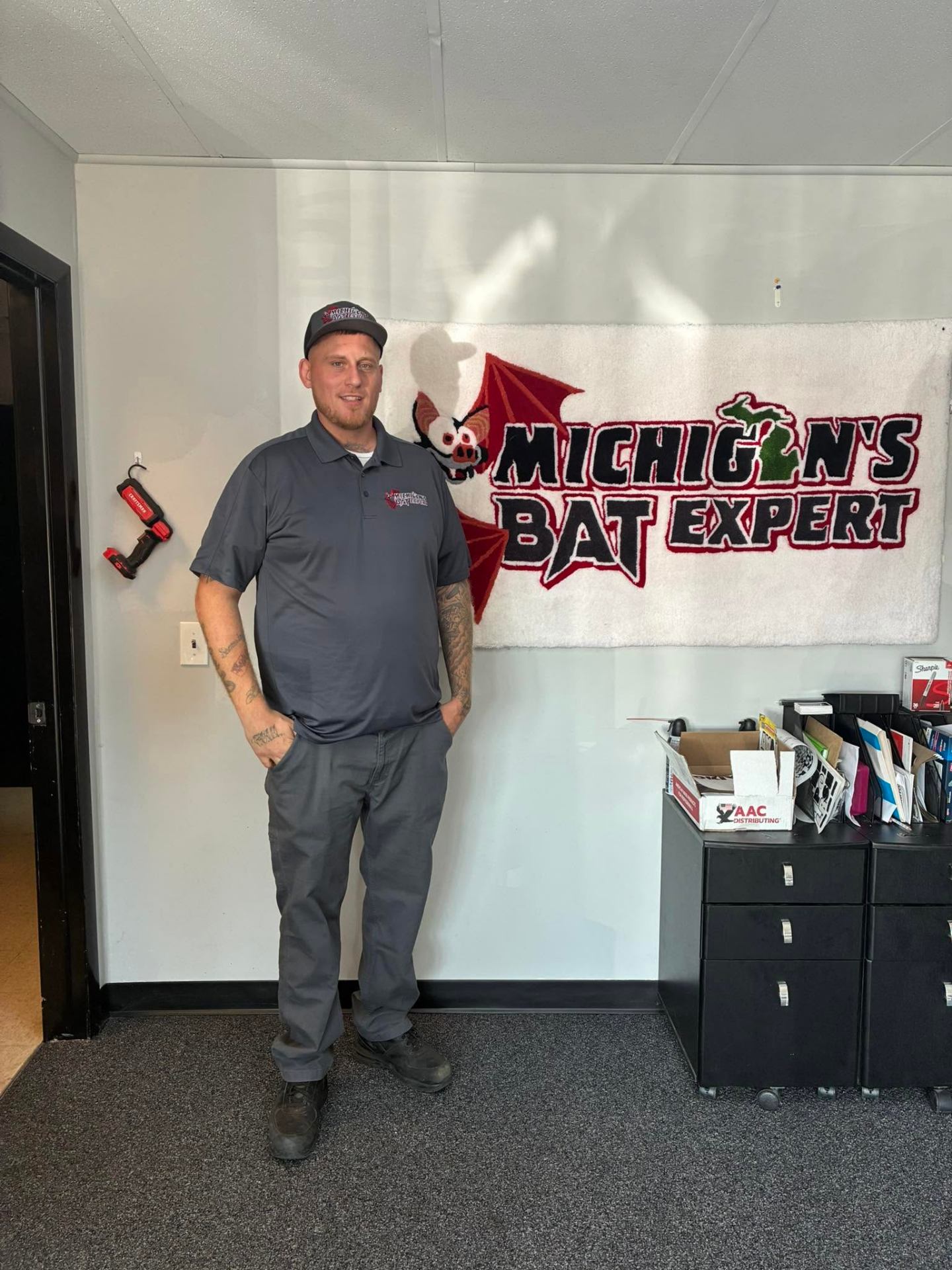
About Samuel Sullivan
I grew up inside the work.
Samuel Sullivan is a second-generation Michigan wildlife specialist, founder of Michigan's Bat Expert, and one of the state's most trusted authorities on humane bat exclusion. He has spent more than half his life on Oakland County rooftops. This is the long version of how that happened — and why he chose to make it his life's work.

In his own words
“My job isn’t to scare a homeowner into a contract. It’s to teach them what’s actually happening in their attic — and then fix it the right way, the first time.”
Samuel Sullivan · Founder, Michigan’s Bat Expert
Chapter I
The boy on the ladder.
Sam was twelve years old the first time he climbed a ladder for money. His uncle — one of the earliest humane wildlife specialists in the state of Michigan — handed him a drop cloth and told him to keep his eyes open. Most kids his age were watching cartoons on Saturday mornings. Sam was learning the difference between a soffit gap and a fascia gap, and why bats preferred one over the other.
It was not a job in the traditional sense. It was an education. His uncle didn’t hand him a manual. He handed him a house — a real one, with a real infestation — and walked him through it, one entry point at a time. That pattern would repeat, thousands of times, over the next three decades.
Chapter II
An apprenticeship, not a job.
There is no shortcut to understanding bat behavior. You don’t learn it from manuals or online videos. You learn it standing on rooftops in the rain, crawling through 150-degree attic spaces in July, and watching — patiently, after sunset — as a colony emerges from a gap the width of a pencil.
Sam carried ladders. Handed over tools. Observed inspections. Cleaned attic spaces most adults wouldn’t step foot in. Over years, not months, those experiences taught him something no classroom ever could: every house tells a story, and animals follow patterns if you know how to read them. That kind of literacy takes a decade to develop. He had one by the time he was twenty-two.
Chapter III
The uncle who pioneered the tube.
To understand Sam, you have to understand his uncle. In an era when most wildlife control meant traps, poison, and dead animals in walls, his uncle believed the answer was simpler and more humane: let them leave, and don’t let them back in.
He was one of the earliest practitioners in Michigan to develop and refine what are now known industry-wide as one-way exclusion tubes — devices that allow bats to exit a structure naturally but prevent re-entry. The methodology he helped popularize is still, to this day, the humane gold standard used by wildlife professionals across North America. Sam didn’t read about that technique in a textbook. He learned it from the man who helped invent it.
Chapter IV
Buying the family business.
When Sam purchased the family practice, he didn’t just inherit a name — he inherited a responsibility. By that point his uncle had been serving Oakland County homeowners for more than twenty-six years, and Sam had already spent years leading his own inspections. Together, the practice now represents more than 30 years of combined family experience in Michigan wildlife exclusion.
He didn’t modernize the trade. He preserved it. The methods, the ethics, the standard of care — all intact. What he added was infrastructure: a proper office, a training program, a written homeowner’s guide, and a brand that could carry the reputation forward.
Chapter V
Why bats. Why only bats.
As the business grew, Sam had a choice: stay a general wildlife company — raccoons, squirrels, skunks, opossums, the whole menu — or specialize in the single most difficult, regulated, and detail-oriented corner of the industry. He chose bats. Not because it was easier. Because it demanded mastery.
With raccoons, squirrels, or skunks, trapping and relocation are options. With bats, they are not. Bats are protected under Michigan law. Every removal must be done through live exclusion. No trapping. No relocating. No killing. On top of that, bat entry points are incredibly small — while most wildlife needs an opening the size of a baseball, a bat can enter through a gap as small as a quarter of an inch. A single missed opening can cause the entire exclusion to fail.
The work sits at the intersection of animal behavior, construction, roofing, ventilation, and Michigan law. Miss any one, and problems follow. That’s the level of care Sam wanted to be judged by. So bats became the only thing he does.
Chapter VI
Education over fear.
Ask Sam what bothers him most about his industry and he won’t say the animals. He’ll say the sales tactics. Too many companies use fear — of rabies, of disease, of collapse — as the primary lever to close a job. Sam refuses to work that way.
A homeowner who understands what’s happening in their attic makes better decisions than one who is scared into signing a contract. So Sam explains. He shows photos. He walks the roofline. He points to the entry point. He explains what a maternity colony is, what the state law requires, what a proper exclusion looks like, and what it costs. Then he lets the homeowner decide.
That’s why he wrote The Homeowner’s Guide to Bat Removal in Michigan. It exists so that a family in Oakland County can understand their situation before anyone shows up in a branded truck.
Chapter VII
The homes. The wildlife. Both.
Sam is protective of the homes he works on. He is equally protective of the animals living in them. Michigan’s bats are quietly essential — a single little brown bat consumes thousands of insects each night, and populations across the Midwest have been devastated by white-nose syndrome over the last two decades. Killing them is not just illegal in Michigan. It’s ecologically indefensible.
Sam’s standard is simple: the family sleeps safely in their home, and every bat leaves alive. That’s the promise. The methods, the tools, the training, the guarantees — all of it exists to keep that promise consistently.
Chapter VIII
Training the next generation.
No technician performs bat exclusions independently without riding with Sam directly, learning entry-point identification firsthand, studying Michigan bat laws, and completing a minimum of six months of hands-on training. Bat removal is not something you learn in a weekend seminar — the margin for error is too small, and the homeowner deserves better than a rookie with a caulk gun.
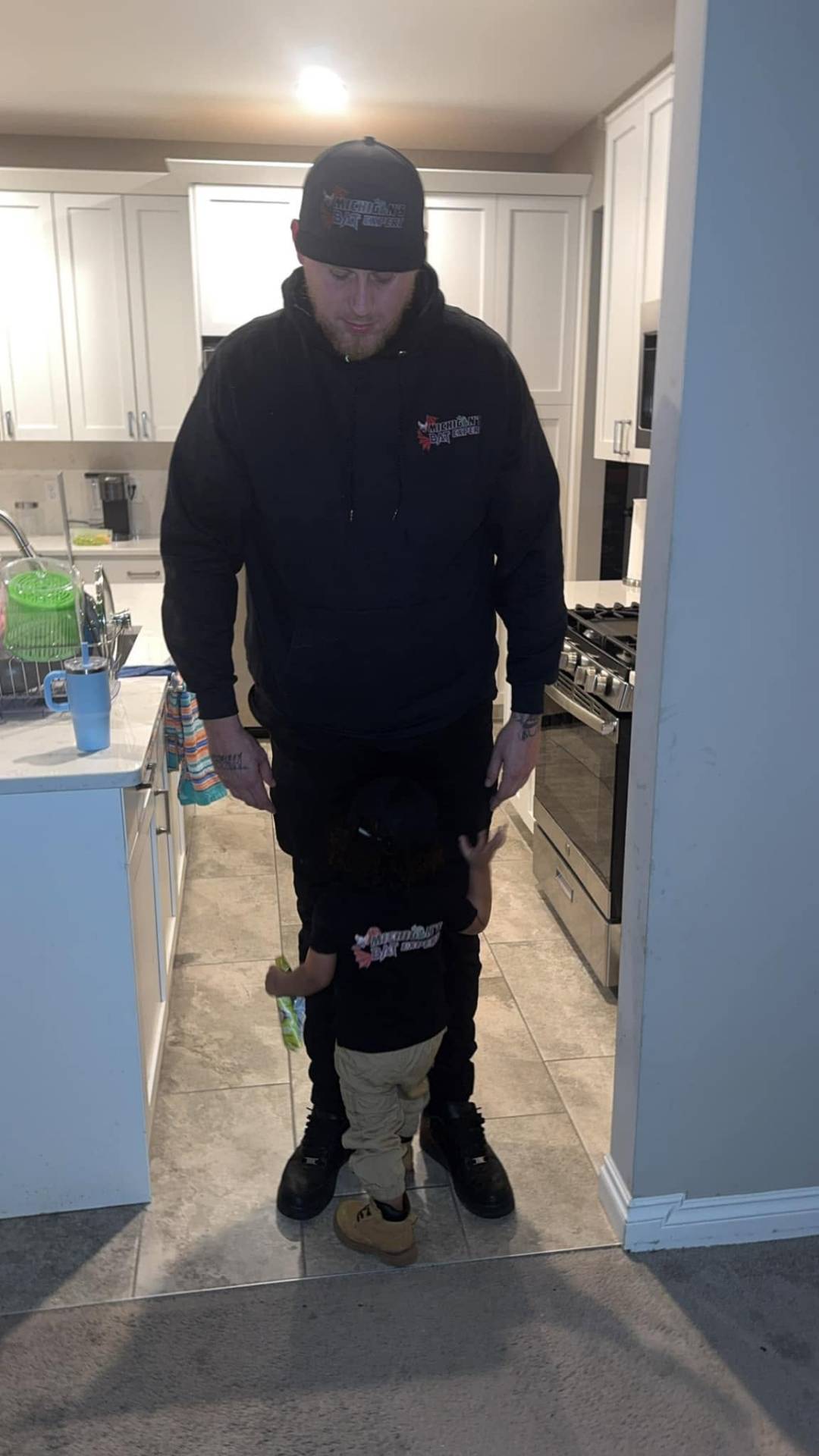
The bar is high on purpose. Sam was trained that way. He trains his team the same way. And one day — when a certain small person is old enough to hold a ladder — he’ll train the third generation the same way, too.
— S.S.
A professional timeline
Thirty years,
told in order.
A family tradition in Michigan wildlife exclusion, from a single specialized practice to a statewide brand.
1994
The family practice begins
Sam's uncle opens one of the first humane wildlife exclusion practices in Oakland County, at a time when the industry is still dominated by trap-and-kill work.
Late '90s
Exclusion tube methodology
His uncle refines and popularizes early versions of the one-way exclusion tube — the humane standard still used across North America today.
2006
Sam joins the crew — age 12
Sam starts riding along with his uncle. Ladders, drop cloths, attic cleanouts. He learns the trade the only way it can honestly be learned: on rooftops.
2012
First solo inspections
After six years of apprenticeship, Sam begins leading his own inspections under his uncle's supervision, specializing in bat entry-point identification.
2016
Focus narrows to bats
Sam chooses to specialize in the most regulated, technical, and misunderstood corner of the industry. Bat exclusion becomes his life's work.
2020
Michigan's Bat Expert is born
Sam launches the brand to serve homeowners who need a true specialist — not a generalist with a ladder.
2023
Purchases the family business
Sam takes ownership of the practice his uncle built, bringing more than thirty years of combined family experience under one roof as MI Critter Control.
Today
The Homeowner's Guide
Sam publishes The Homeowner's Guide to Bat Removal in Michigan — a plain-language field manual for homeowners facing an infestation.
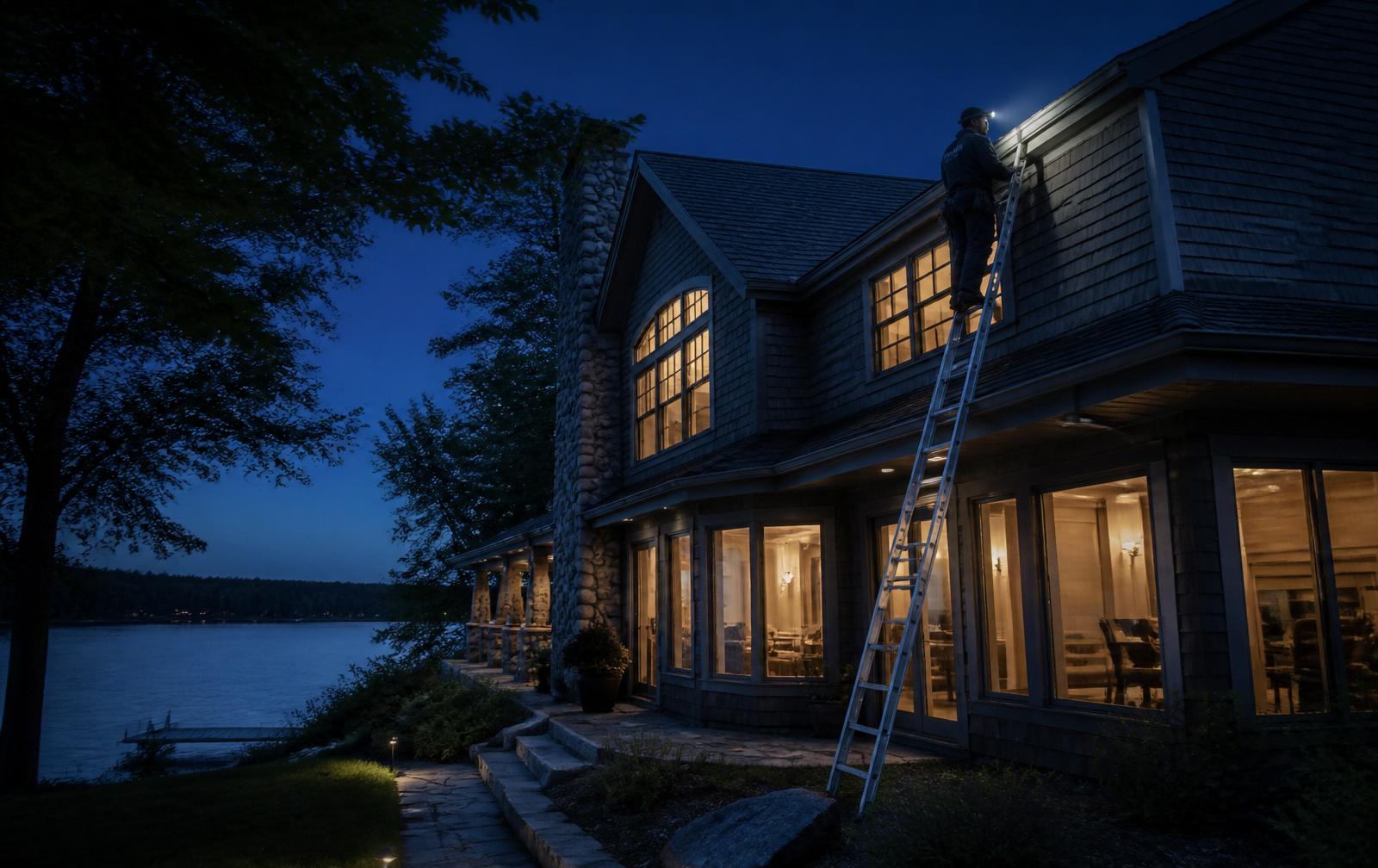
Field notes · Oakland County · September
My Mission
Protect the home.
Respect the wildlife.
My mission is straightforward, and I’ve held to it since I was old enough to hold a ladder: help Michigan homeowners protect their homes while respecting the wildlife we share this state with.
A house is one of the largest investments a family will ever make. A bat colony in the attic can quietly compromise it — insulation, drywall, air quality, resale value. That’s real, and homeowners deserve a specialist who takes it seriously.
At the same time, Michigan’s bats are not pests. They are a protected, essential part of our ecosystem, and they’re already under pressure from disease and habitat loss. Every one of them can, and should, leave alive.
My job is to sit at that intersection — homeowner and wildlife, structure and species, law and craft — and get both sides right. Every home. Every colony. Every time. If I’m doing my job well, the family sleeps easy and the bats keep doing what they do at dusk over the neighborhood.
— Samuel Sullivan
Founder · Michigan’s Bat Expert